
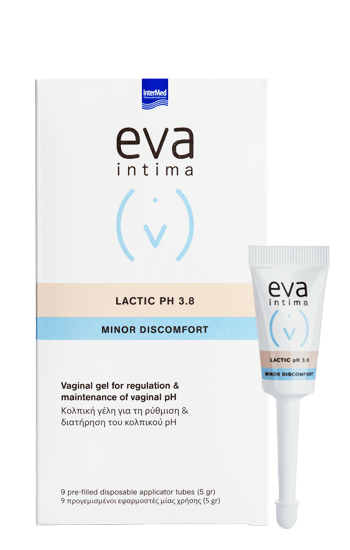


EVA INTIMA® LACTIC GEL with lactic acid and glycogen is designed to immediately restore the vaginal pH to its normal acidic value while enhancing the normal vaginal flora. At the same time, it relieves symptoms due to its minor disorders such as hypersecretion, itching, irritation & burning, as a result of bacterial infections or other conditions and offers an immediate feeling of relief thanks to the chamomile and aloe extracts it contains.

It helps restore the vaginal microenvironment to an acidic pH, which is favorable for beneficial lactobacilli, while also providing them with the glycogen they need to survive and thrive.
This action strengthens the body’s natural local defense mechanisms and helps reduce minor vaginal discomforts.
The specially designed nozzle of the ready-to-use applicator ensures convenient, atraumatic application, as well as easy portability.
It does not contain medicinal substances, hormones, synthetic colorants, or fragrances.
Apply in the evening before going to bed.
Hold the vaginal applicator by its wider end. With the nozzle pointing downward, gently shake it so that the contents move toward the nozzle. While holding the applicator in this position, twist and remove the protective cap.
Insert the nozzle deep into the vagina, preferably while lying down, and squeeze the applicator to release the contents into the vagina. Remove the applicator without releasing pressure on its walls. Any excess product that may flow out of the vagina after application can be easily removed with a dry tissue.
Vaginitis is an inflammation of the vaginal mucosa, the membrane that lines the inner surface of the vagina.
The main symptoms of vaginitis, regardless of its cause, include itching, irritation, a burning sensation, and excessive vaginal discharge that differs from normal discharge in texture, odor, or color. In many cases, pain during sexual intercourse and urination may also occur.
The most common causes of vaginitis are bacterial and fungal infections. However, it may also result from a lack of estrogen or from an allergic reaction (for example, to condoms or other intravaginal products).
In some cases, signs of inflammation may be present without a specific cause being identified. These cases are referred to as non-specific vaginitis and are usually associated with hormonal imbalances, which are common during pregnancy.
Bacterial vaginitis is the most common type of vaginitis. The symptoms that most commonly occur include itching, irritation, a burning sensation, and excessive vaginal discharge that is thin in consistency, gray in color, and has a strong fishy odor, which may become more noticeable after sexual intercourse or menstruation.
However, special attention is required, as there are also sexually transmitted infections caused by bacteria, such as Trichomonas vaginal infection.
In all cases, accurate and safe diagnosis and treatment can only be provided by a gynecologist following a series of diagnostic procedures (such as colposcopy, vaginal fluid culture, and other tests). This approach is recommended whenever you notice any changes in the vaginal or surrounding intimate area.
Fungal vaginitis is the second most common type of vaginitis. It is not a sexually transmitted infection and is not considered contagious, as fungi are a natural part of the normal vaginal flora, where they are usually present in low numbers. A common cause of their overgrowth, which can lead to vaginitis, is any condition that reduces the population of lactobacilli in the vagina and allows other microorganisms to become dominant. Examples include the use of antibiotics for any reason, or the use of inappropriate and highly antiseptic vaginal cleansing products.
The symptoms that most commonly occur include intense itching, irritation, a burning sensation, and excessive vaginal discharge that is thick in consistency and white in color, commonly referred to as leukorrhea, without any characteristic unpleasant odor.
In all cases, accurate and safe diagnosis and treatment can only be provided by a gynecologist following a series of diagnostic procedures (such as colposcopy, vaginal fluid culture, and other tests). This approach is recommended whenever you notice any changes in the vaginal or surrounding intimate area.
Depending on the symptoms you are experiencing, there are product options that may help provide relief. However, complete resolution of the underlying cause of the inflammation cannot be achieved without first obtaining a proper diagnosis and receiving the appropriate treatment prescribed by your gynecologist.
In cases of bacterial vaginitis, you may combine (bacterial vaginitis treatment regimen)
In cases of fungal vaginitis, you may combine (fungal vaginitis treatment regimen)
In cases of non-specific vaginitis, you may combine (non-specific vaginitis treatment regimen)
The development of vaginitis can often be prevented by maintaining the normal vaginal flora, with lactobacilli remaining the dominant microorganisms, preserving the vagina’s naturally acidic environment (pH 3.5–4.5) through the presence of lactic acid, and ensuring adequate moisture for the vaginal tissues. These factors help inhibit the growth of infection-causing microorganisms. When any of these protective factors become disrupted, appropriate products such as probiotics, vaginal pH regulators, and moisturizing products can help restore and maintain them, thereby supporting the prevention of vaginal infections.
PREVENTING VAGINITIS AFTER MENSTRUATION
Tips:
The transition into the reproductive years is marked by the onset of menstruation, which typically occurs every 24 to 28 days and lasts for several days. Although the presence of blood in the vaginal area is a normal physiological process, it can cause minor disturbances to the vaginal environment by affecting vaginal pH and reducing the dominance of lactobacilli, since blood has a neutral pH. This effect, combined with the fact that blood provides a favorable nutrient source for the fungi that naturally exist in the vagina, can often reduce the body’s ability to control fungal overgrowth. As a result, inflammation and infection may develop in the vaginal area.
Supporting the natural removal of menstrual residue and promptly restoring vaginal pH to its normal acidic range can help reduce the likelihood of developing vaginitis after the end of menstruation.
You may consider combining: (regimen for the prevention of vaginitis and the restoration of natural vaginal balance after menstruation)
Tips:
You may adopt the daily use of oral probiotics through specialized lactobacillus-containing supplements to naturally and effectively support and strengthen the vaginal flora.
Although fungi are natural inhabitants of the vagina, they are a very common cause of vaginal infections. Certain factors may reduce the body’s ability to effectively control fungal growth and fully resolve the symptoms of vaginitis. As a result, symptoms of fungal vaginitis often reappear shortly after a previous episode, a condition known as recurrent vulvovaginal candidiasis. The most common causes include the development of resistance to standard treatments, incomplete or inaccurate diagnosis, self-diagnosis, failure to follow the prescribed treatment regimen, and other contributing factors.
In all cases, accurate and safe diagnosis and treatment can only be provided by a gynecologist following a series of diagnostic procedures (such as colposcopy, vaginal fluid culture, identification of the causative strains, selection of the most effective active ingredients for each case, and other relevant tests). This approach is recommended whenever you notice any changes in the vaginal or surrounding intimate area.
Strict adherence to the prescribed treatment regimen, together with the adoption of practices that actively support the local balance and natural defense mechanisms of the vaginal environment, are key measures for the successful prevention of recurrent infections.
PREVENTING VAGINITIS AFTER MENSTRUATION
Tips:
Lactic acid is the key factor responsible for maintaining the vagina’s naturally acidic environment.
Lactic acid is the key factor responsible for maintaining the vagina’s naturally acidic environment. During the reproductive years, lactic acid is produced by lactobacilli, the beneficial bacteria that make up the normal vaginal flora, through the metabolism of glycogen, which they use as a source of nutrition. This acidic vaginal environment promotes the growth and activity of lactobacilli while at the same time inhibiting the proliferation of other potentially harmful microorganisms. However, maintaining an acidic vaginal environment remains important beyond the reproductive years, particularly during menopause, as it can help reduce the risk of infections. At this stage of a woman’s life, vaginal pH regulators can provide immediate support by supplying lactic acid directly and rapidly restoring the optimal level of vaginal acidity.
Itching, irritation, and a burning sensation are clinical symptoms that may occur in the vaginal area due to a variety of causes. They are most commonly associated with infections of different origins and are often accompanied by increased vaginal discharge, with or without odor. When these symptoms occur in the absence of excessive vaginal discharge, they may be indicative of vaginal dryness.
In all cases, accurate and safe diagnosis and treatment can only be provided by a gynecologist following a series of diagnostic procedures (such as colposcopy, vaginal fluid culture, and other tests). This approach is recommended whenever you notice any changes in the vaginal or surrounding intimate area.